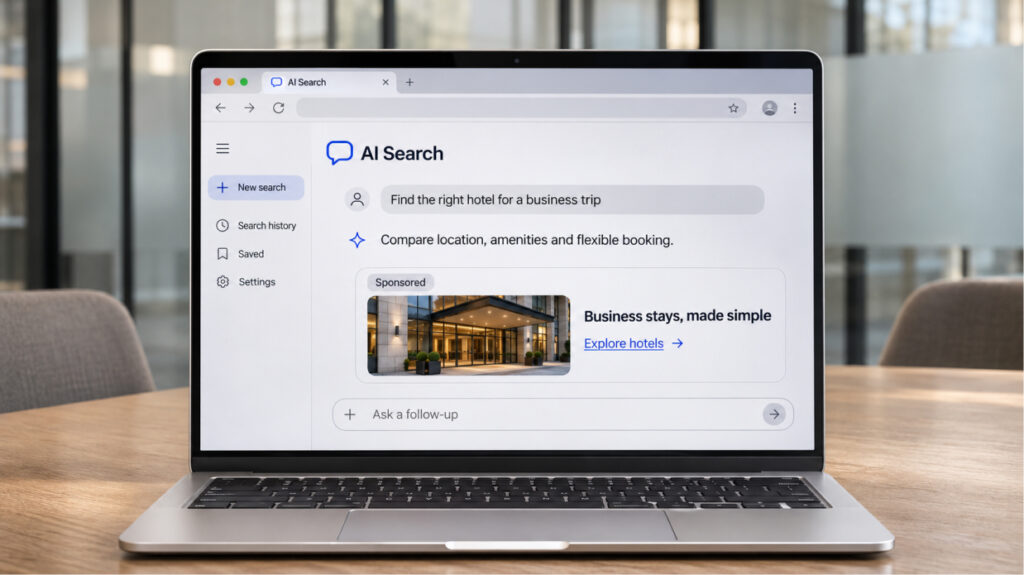
What happens when customers start asking AI which products to consider, which services suit their needs and which brands deserve their attention?
For advertisers, this changes where and how a business can become part of a customer’s decision. A person may now describe a problem, compare options and narrow a shortlist within one conversation before visiting a brand’s website.
AI search is already creating new advertising opportunities. Google has introduced advertising within its AI-powered search experiences, while ChatGPT offers paid placements alongside conversations. For global brands, these developments raise practical questions about visibility, audience relevance and where to invest next.
The response should begin with a broader view of digital advertising. Brands need to understand how AI search fits alongside premium publishers, video, social media and other channels that help customers discover and evaluate businesses.
For advertisers across the GCC and MENA, this also makes experienced media partners valuable. IAS Media combines international media access with regional campaign support, including its role as the exclusive media representative for Times Internet across GCC and MENA. That relationship gives advertisers an established route to premium digital audiences as they assess changes in customer discovery.
What is AI search?
AI search uses artificial intelligence to interpret questions and present answers that may include explanations, comparisons, recommendations and links. Users can refine their requirements through follow-up questions instead of starting a new search each time.
Consider a customer researching a holiday. They might begin with:
“Where should I travel for a family holiday in December?”
They can then add a budget, preferred flight duration, children’s ages and accommodation requirements. Each question makes their needs more specific.
A business buyer might follow a similar process when researching software, professional services or international suppliers.
For advertisers, the important change is the amount of context available within the research process. Customers are expressing what they need, why they need it and which factors could influence their choice.
An effective digital advertising strategy should reflect those details in its messaging, content and landing pages.
How AI search could change digital advertising
Customers can move from discovery to comparison more quickly
AI-powered experiences can bring several research activities into one conversation. Someone can learn about a product category, ask about alternatives and explore suitability without opening a separate webpage for every question.
This creates a different starting point for the eventual website visit.
A prospective customer may arrive already familiar with the category and ready to ask about availability, pricing or implementation. Others may want evidence supporting something they encountered during their research.
Brands should make it easy to find that information. A relevant advertisement followed by a vague landing page can interrupt an otherwise promising customer journey.
Advertising relevance becomes more contextual
Traditional keyword research remains useful, but conversational questions often reveal requirements that a short search phrase cannot.
For example, “business software” offers limited context. “Software for a small business managing customer enquiries across three countries” describes a more specific problem.
Google explains that ads in its AI-powered experiences can match either directly to a search query or contextually to the query and AI response. ChatGPT’s advertising documentation also describes matching based on conversational context, intent and advertiser information.
The practical lesson is straightforward: brands need to explain their relevance clearly.
Advertisements should communicate who the offering serves, what it helps customers achieve and why it fits the situation. Landing pages should support that message with useful details and evidence.
Brands need to distinguish paid ads from organic AI visibility
AI search advertising and organic visibility in AI answers are separate activities.
Paid advertising involves purchasing eligible placements. Organic AI visibility concerns whether a platform mentions or references a brand when generating an answer.
Both Google and OpenAI state that advertising does not influence their organic AI responses. An advertising placement therefore does not purchase an independent recommendation.
This distinction matters when setting expectations. A campaign may aim to generate qualified visits or enquiries, while content improvements may help customers understand the business more clearly. Each activity needs its own objectives and assessment.
What global brands need to watch
Advertising availability differs by market
A global platform does not necessarily offer identical advertising products in every country or language.
Google announced an expansion of AI Mode advertising to countries including India, Australia, Canada, Malaysia and Singapore in October 2026. OpenAI announced broader self-service advertising access across India, Europe, the Middle East and North Africa in August 2026.
Before allocating a budget, advertisers should confirm the available markets, supported campaign types, audience controls and reporting options.
For a business operating across several countries, this may mean testing an opportunity in one market before extending it elsewhere.
New formats may still be in testing
AI advertising is developing through a mixture of launches, pilots and gradual expansions.
A newly announced format may be available only to selected advertisers or under specific conditions. Google has described new AI Mode formats as tests, while OpenAI has announced testing of Sponsored Agents that allow users to interact with a business-sponsored agent after clicking an advertisement.
Brands should establish what can actually be booked and measured before building a campaign around an announcement.
More detailed searches require more useful creative
A customer asking a detailed question is unlikely to be satisfied by a general claim such as “the best solution for your business”.
Advertising creative should make the offer tangible. That could mean explaining a relevant feature, showing a product in use or addressing a common concern.
For a tourism brand, useful information might include family facilities or destination experiences. For a technology business, it could include supported workflows, integrations or implementation support.
The aim is to help the customer recognise a suitable option and understand the next step.
Performance must be judged beyond clicks
An emerging channel can generate attention without generating valuable business.
Before launching an AI advertising campaign, define the outcome that matters. It could be a completed purchase, qualified enquiry, booked consultation or application.
Review the quality of those actions as well as their cost. A campaign that attracts fewer enquiries may still be useful if those enquiries closely match the intended customer.
Where reporting cannot isolate an AI placement from other campaign delivery, acknowledge that limit. Decisions should reflect what the data can support.
Why premium digital publishers still matter
As AI search becomes another route to discovery, brands still need to build awareness and give customers reasons to consider them.
A customer might first encounter a business while reading a news website, watching a video or exploring specialist industry content. Later, that person may use AI search to compare the brand with alternatives.
Premium publisher advertising can support the earlier stages of that journey by introducing a brand within content relevant to its audience.
For example, a business publication may provide a suitable setting for a B2B campaign. Travel content may help a destination reach people exploring holiday ideas. Regional-language media may help an advertiser communicate with a particular audience.
The value comes from matching the publication, audience and message to the campaign objective.
Paid publisher placements should be assessed on that basis. They do not guarantee that an AI platform will cite or recommend the advertiser.
How different advertising channels can work together
Global brands should assess AI search within the wider customer journey.
A campaign may need to introduce a business, explain its proposition, support comparison and encourage action. Different channels can contribute at different points.
| Advertising channel | Potential role |
| Premium digital publishers | Introduce the brand to audiences consuming relevant news, business or lifestyle content. |
| Digital video and television | Build recognition and communicate the proposition through sight, sound and storytelling. |
| Social media and influencers | Demonstrate products, answer audience questions and encourage engagement. |
| Search and AI search advertising | Reach customers researching needs or comparing possible solutions. |
| Brand websites and landing pages | Provide evidence, answer detailed questions and support enquiries or purchases. |
For example, a hypothetical destination campaign could use publisher content to introduce travel experiences, video to make them memorable and search advertising to reach people actively planning a trip.
The appropriate combination depends on the audience, market, budget and purchase cycle. AI search adds another consideration to that planning process.
How global brands can prepare for AI search advertising
Understand the questions customers ask before buying
Sales conversations, customer enquiries and support requests reveal the information people need before making a decision.
Identify recurring questions about suitability, availability, service coverage, pricing and practical requirements. Use those insights to improve advertisements and website content.
This helps connect the brand’s message with real customer concerns.
Improve landing pages around specific needs
A detailed search should lead to a page that answers the relevant question.
A customer researching international advertising may want to know which markets are supported, what media opportunities are available and how to request a proposal. A generic company introduction may not provide enough information.
Each landing page should make the offer clear, explain who it serves and present an appropriate next step.
For international campaigns, localisation should include service availability, examples, contact options and language—not simply a translated headline.
Test with a defined objective
Begin with a clear audience, market and offer. Set an appropriate test budget and establish measurement before launch.
Avoid changing every part of the campaign simultaneously. A focused test makes it easier to understand whether the placement, message and landing page are working together.
Increase investment when the evidence supports it.
Connect advertising reports with sales feedback
Marketing dashboards show activity, but sales teams can help assess whether enquiries represent suitable opportunities.
Review whether prospective customers understand the offer, match the target audience and have realistic requirements.
If the same misunderstanding appears repeatedly, revise the advertisement or landing page. This feedback can improve both new AI advertising tests and established campaigns.
How IAS Media supports brands in an evolving digital landscape
IAS Media brings more than 32 years of experience and a network of over 620 publishers and website partners to international advertising. Its reach spans markets including India, Europe, the United States, China, Japan and MENA, helping brands explore media opportunities beyond a single country.
For advertisers, that experience provides a basis for evaluating where their intended audiences consume content and which channels suit their objectives.
Through its digital media representation services, IAS Media supports paid campaigns, content marketing and digital audience engagement. Its programmatic advertising services cover display, video, audio and connected TV, supporting campaigns across different media environments.
As AI search develops, the central planning questions remain practical: who should the campaign reach, what should they understand and what action should follow?
Exclusive Times Internet representation across GCC and MENA
IAS Media is the exclusive media representative for Times Internet across GCC and MENA.
Through this partnership, advertisers can explore Times Internet advertising opportunities across properties including The Times of India, The Economic Times and regional-language platforms. Available opportunities include display, video, native advertising and branded content, supported by regional campaign planning and execution.
This is relevant to the AI search discussion because brands need visibility across the wider discovery journey. Established publisher campaigns can introduce an offering and explain its value before customers begin comparing options elsewhere.
A well-planned media strategy can therefore combine premium publisher opportunities with carefully evaluated emerging channels.
Connecting AI innovation with practical campaign objectives
IAS Media’s Times Internet partnership information also describes AI-enabled content and conversational advertising opportunities, including AdTalk. These are publisher advertising capabilities; their suitability and current availability should be discussed against the campaign brief.
For brands, the useful question is what the technology contributes. Does it help explain a product, answer a customer question or support a relevant enquiry?
That keeps the focus on the customer experience and business objective while allowing room to test new formats.
Conclusion
AI search is changing how customers explore questions, compare options and discover businesses. For global brands, it creates new advertising possibilities while making clear messaging, useful content and reliable measurement even more important.
The strongest approach is to assess these opportunities alongside established channels. Premium digital publishers, video, social media and search can each contribute to a customer’s decision.
Brands that understand their audiences and test with clear objectives will be better prepared to decide where AI search advertising belongs in their strategy.
Plan your next digital advertising campaign with IAS Media
Prepare your brand for changing customer discovery with a media plan built around your audience and business goals.
With more than 32 years of experience, an international publisher network and exclusive Times Internet representation across GCC and MENA, IAS Media helps advertisers explore relevant digital media opportunities.
Contact IAS Media with your target markets, campaign objectives and budget to discuss a tailored proposal.
Get in Touch With IAS Media
Experience the power of global brand building and audience engagement with IAS Media. Let’s connect and elevate your brand’s presence together.