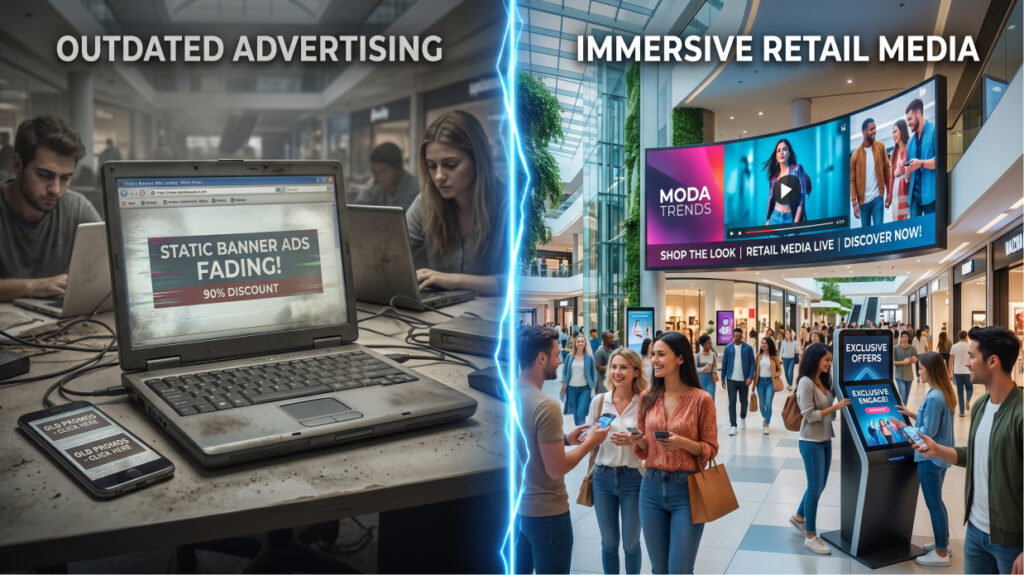
Digital advertising has evolved through multiple phases, from banner ads and search campaigns to programmatic buying and social media advertising. Each phase has promised better targeting, higher efficiency, and improved return on investment. However, as platforms expanded and competition increased, advertisers began facing a consistent challenge: attention is no longer enough.
Consumers today are exposed to thousands of digital ads daily across search engines, social media platforms, video content, mobile apps, and websites. This saturation has made it increasingly difficult for brands to stand out, let alone drive meaningful conversions. Even with advanced targeting tools, traditional digital advertising often struggles to align impressions with actual purchase intent.
In response to this challenge, a new advertising model has rapidly gained momentum — Retail Media Networks. Unlike traditional digital ads that rely on reaching users across the internet, Retail Media Networks operate within retail ecosystems where users are already in a shopping mindset. This creates a direct connection between advertising exposure and purchase behavior.
At IAS Media, this shift is seen as one of the most important developments in modern performance marketing. It reflects a transition from attention-driven strategies to intent-driven ecosystems, where advertising is no longer about interrupting users but about supporting active buying decisions.
While traditional formats such as local TV advertising in UAE still play a strong role in building awareness and brand recall, Retail Media Networks are increasingly becoming the primary driver of measurable conversions.
Understanding Retail Media Networks
Retail Media Networks are advertising platforms operated by retailers that allow brands to place ads directly within digital shopping environments. These environments include e-commerce websites, grocery apps, online marketplaces, and even in-store digital screens connected to retail ecosystems.
What makes this model fundamentally different is the context in which ads are shown. Instead of appearing while users are browsing unrelated content, retail media ads appear while users are actively searching for products, comparing options, or preparing to make a purchase.
This proximity to buying behavior creates a significant shift in advertising effectiveness. The audience is no longer passive. They are already engaged in decision-making, which increases the likelihood of conversion.
Retail Media Networks also rely heavily on first-party data, allowing advertisers to understand real purchase behavior instead of relying on inferred signals from external platforms. This makes targeting more accurate and performance outcomes more predictable.
Why Traditional Digital Ads Are Losing Efficiency
Traditional digital advertising still plays an important role in modern marketing strategies, but its efficiency has declined in terms of conversion performance. One of the primary reasons for this decline is audience fragmentation. Users now move across multiple platforms throughout the day, making it difficult for advertisers to maintain consistent attention.
Another major challenge is ad saturation. Consumers are constantly exposed to branded content, sponsored posts, and promotional messages. This has led to reduced engagement rates and increased ad fatigue, where users begin ignoring repetitive advertising formats.
Even with advanced targeting systems, traditional digital ads often struggle with timing. A user may see an ad for a product, but if they are not in a buying mindset at that moment, the impact is minimal. This disconnect between exposure and intent reduces overall campaign efficiency.
As a result, advertisers are increasingly looking for environments where intent is already present rather than trying to create it artificially.
Why Retail Media Networks Deliver Stronger Performance

Retail Media Networks outperform traditional advertising primarily because they align directly with consumer intent. Instead of targeting users based on interests or demographics, they target users based on real-time shopping behavior.
When a customer searches for a product category, views product pages, or adds items to their cart, they are already in a decision-making phase. Advertising in this environment does not interrupt the user experience; it enhances it by guiding purchase decisions.
This shift makes Retail Media Networks significantly more efficient in driving conversions compared to traditional digital ads.
First-Party Data Advantage
One of the most powerful aspects of Retail Media Networks is access to first-party data. Retailers can track actual purchase history, browsing patterns, repeat visits, and product-level interactions within their own ecosystems.
This allows brands to build highly accurate targeting strategies based on real behavior rather than assumptions. As privacy regulations tighten and third-party cookies continue to disappear, first-party data becomes even more valuable for performance marketing.
This level of insight allows advertisers to reach users who are not just interested but already actively engaged in the buying process.
Closed-Loop Attribution and Measurement
Another key advantage is measurement clarity. Retail Media Networks offer closed-loop attribution systems where advertisers can track the entire journey from ad exposure to final purchase within the same platform.
This eliminates much of the uncertainty associated with traditional digital advertising, where users may interact with multiple platforms before converting. With retail media, performance can be directly tied to sales outcomes, making optimization more precise and actionable.
The Shift From Attention to Intent
One of the most important changes in modern advertising is the shift from attention-based marketing to intent-based marketing. Traditional digital ads primarily focus on capturing attention through reach, impressions, and engagement metrics. While these metrics are still important, they do not always reflect actual buying behavior.
Retail Media Networks, on the other hand, are built around intent. They focus on users who are already in the process of discovering, evaluating, or purchasing products.
This shift fundamentally changes how advertising success is measured. Instead of asking how many people saw an ad, marketers now focus on how many users were ready to act.
At IAS Media, this evolution is seen as a major step forward in performance marketing strategy, especially for brands that rely heavily on measurable conversions rather than just awareness.
Retail Media Networks in the UAE Market
The UAE has become one of the most advanced digital commerce markets in the region. With high smartphone penetration, strong e-commerce adoption, and digitally engaged consumers, the environment is ideal for Retail Media Networks to grow rapidly.
Consumers in the UAE are highly active across online shopping platforms, and they expect fast, personalized, and relevant shopping experiences. This makes retail media particularly effective in influencing purchase decisions.
At the same time, traditional formats like local TV advertising UAE continue to play an important role in building brand awareness across broader audiences. Television remains a powerful medium for storytelling and mass reach, especially for large-scale brands.
However, many advertisers are now combining both approaches. Retail Media Networks are used for conversion-driven campaigns, while traditional media is used for awareness and recall. This combination creates a balanced marketing ecosystem where both visibility and performance are addressed.
How Retail Media Improves Customer Targeting
Retail Media Networks allow advertisers to move beyond generic targeting models and focus on actual shopping behavior. Instead of targeting users based on age, gender, or interests alone, brands can target users based on what they are actively searching for or purchasing.
This level of precision reduces wasted impressions and improves campaign efficiency. It also allows advertisers to create highly personalized messaging that aligns with where the customer is in their buying journey.
For example, a user browsing a product category may see awareness-level ads, while a user who has added a product to their cart may see discount-based or urgency-driven messaging. This dynamic targeting improves conversion rates significantly.
Role of Technology and AI in Retail Media Growth
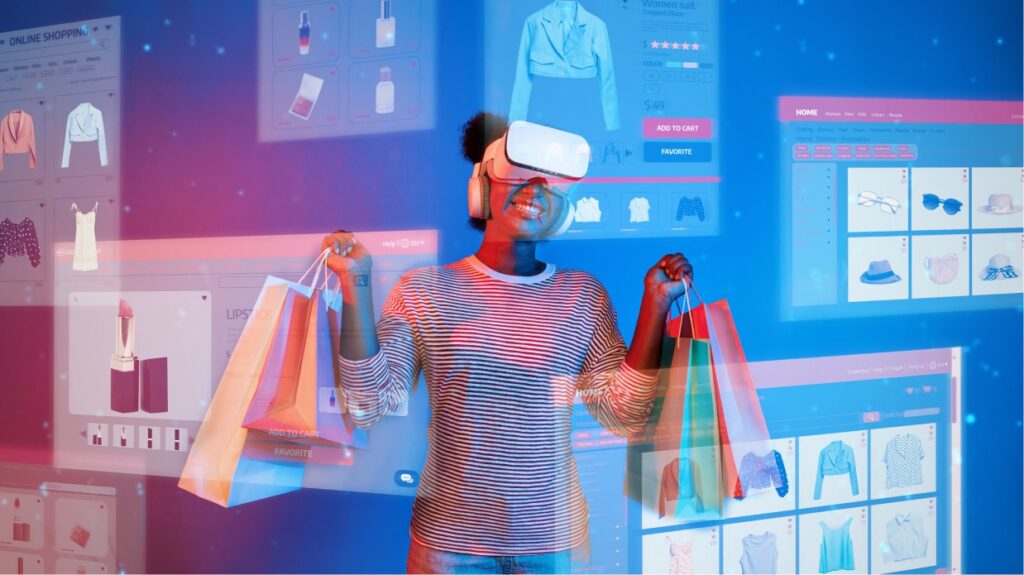
Technology plays a major role in the expansion of Retail Media Networks. AI-driven recommendation systems, predictive analytics, and real-time bidding models are helping advertisers optimize campaigns more effectively than ever before.
These systems analyze user behavior patterns, purchase history, and engagement signals to predict which users are most likely to convert. This allows advertisers to allocate budgets more efficiently and focus on high-value audiences.
Machine learning models also help improve ad relevance by continuously optimizing placements based on performance data. This creates a more adaptive advertising environment where campaigns evolve based on real-time behavior.
Future of Retail Media Networks
Retail Media Networks are expected to continue expanding as more retailers build their own advertising ecosystems. This shift is creating a new advertising infrastructure where retail platforms become both sales channels and media platforms.
As personalization technology improves, retail media will become even more precise in predicting consumer needs and influencing purchase decisions. At the same time, integration with offline retail environments will further strengthen its impact.
Traditional digital advertising will continue to exist, but its role may gradually shift more toward awareness and storytelling rather than direct conversion.
Conclusion
Retail Media Networks are becoming more powerful than traditional digital ads because they operate within environments where purchase intent already exists. By leveraging first-party data, intent-based targeting, and closed-loop measurement systems, they provide a level of efficiency that traditional advertising cannot easily match.
While formats such as local TV advertising in UAE remain important for building brand awareness, Retail Media Networks are emerging as the strongest channel for driving measurable conversions and performance outcomes.
At IAS Media, this shift is seen as a key evolution in modern marketing strategy, where understanding consumer behavior and intent is more important than simply maximizing reach.
As the advertising landscape continues to evolve, brands that adapt to this shift will be better positioned to achieve both visibility and performance in a highly competitive digital environment.