A newspaper advertising campaign can introduce a destination to potential travellers, put a business proposition in front of decision-makers or support a brand entering a new market. Its value depends on how closely the publication, edition and message match the people the advertiser wants to reach.
For global brands, that means looking beyond a familiar newspaper name. A campaign targeting business leaders in Germany needs a different media plan from one promoting a hotel to readers in India or introducing a consumer brand in Singapore. Language, geographical coverage, editorial interests and the available advertising formats all influence the choice.
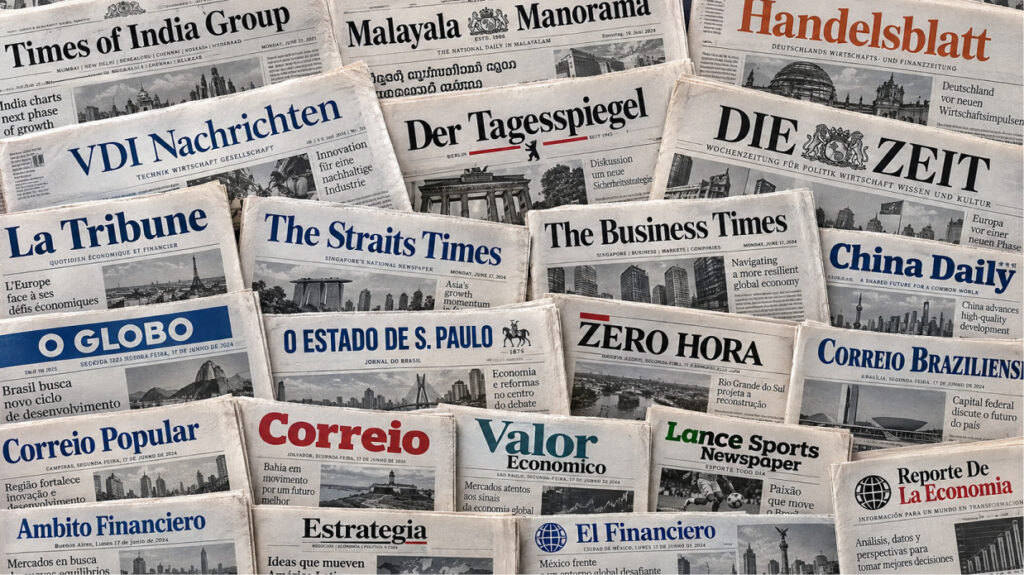
IAS Media helps advertisers explore international newspaper opportunities through its publication relationships and print media advertising services. Its newspaper portfolio spans India, Germany, France, Singapore, China and Latin America, including exclusive representation relationships with selected newspaper brands and groups.
What Newspaper Advertising Can Contribute to a Global Campaign
Newspapers give advertisers a defined editorial setting in which to present their message. Business coverage, regional news, travel sections and specialist reporting each attract readers for different reasons. Choosing the right environment helps a brand explain why its offer matters to that audience.
Print also gives creative teams a fixed space to work with. A full-page advertisement can establish a visual identity, while an approved advertorial can explain a destination, service or investment proposition in greater detail. The format should reflect how much information a reader needs before taking the next step.
For international campaigns, the publication’s connection to a particular market is especially useful. National recognition, regional relevance and professional readership serve different objectives. A focused regional edition may be appropriate for a local opening, while a business publication may better suit a campaign seeking commercial enquiries.
Newspaper advertising works best when the brief specifies what should happen after someone sees the advertisement. That might be visiting a campaign page, requesting a brochure, making an enquiry or recognising the brand during a later purchase decision.
Choose the Market Before Choosing the Newspaper
Start with the audience and the commercial opportunity. A brand may be based in Dubai but need to reach readers in Germany, India or Singapore. The advertiser’s location and the campaign’s target market are separate decisions.
Before selecting publications, establish:
- The countries, cities or regions where the campaign needs visibility.
- The reader’s likely interests, language and role in the buying decision.
- Whether the objective is awareness, market entry, enquiries or a specific response.
- The timing of the campaign and any relevant launch, travel or purchasing period.
- The budget available for media, creative adaptation and production.
For example, a university recruiting internationally might prioritise relevant reader profiles and application deadlines. A hotel could focus on source markets and booking periods. An industrial supplier would need to assess whether a publication reaches people involved in evaluating and purchasing its products.
IAS Media’s international media representation services provide a starting point for brands planning this kind of cross-border campaign.
Newspaper Publications in IAS Media’s Portfolio
IAS Media’s newspaper relationships bring together general news, business and specialist titles. The following publications and groups provide a starting point for discussing suitable markets. The specific edition, current publishing format and advertising inventory should be confirmed when developing the media proposal.
India
The Indian newspaper portfolio includes Times of India Group and Malayala Manorama.
For a Times of India Group enquiry, advertisers should specify the intended audience, language and geography so that the appropriate title and edition can be considered. A group-level relationship should lead to a clearly defined publication plan, with each proposed placement identified before booking.
Malayala Manorama can be considered when reviewing newspaper options for Malayalam-speaking audiences. Edition selection remains important: the proposal should explain how the chosen distribution area relates to the campaign’s intended readers.
These decisions are particularly relevant for tourism, education, retail and service brands planning campaigns around specific Indian markets.
Germany
IAS Media’s German newspaper portfolio includes Handelsblatt, VDI Nachrichten, Der Tagesspiegel and Die Zeit.
Handelsblatt offers a business and finance setting, while VDI Nachrichten provides an engineering and technology focus. Der Tagesspiegel brings a Berlin-centred news environment, and Die Zeit offers a weekly newspaper format with broad editorial coverage.
For advertisers, these differences help shape the shortlist. A technical product, a university programme and a destination campaign require different audience assessments, even when all three target Germany. Review the relevant readership information and available sections before deciding where the message belongs.
Brands planning this market can explore IAS Media’s guide to advertising in Germany for a broader view of its German media offering.
France
The French newspaper portfolio includes La Tribune.
A campaign brief for France should make the intended audience and geographical coverage clear, then establish which La Tribune edition or platform is suitable. Creative adaptation should address the reader’s language and the local relevance of the proposition, particularly when the brand is entering the market for the first time.
Singapore
IAS Media’s Singapore newspaper portfolio includes The Straits Times and The Business Times.
These titles allow advertisers to explore general news and business-focused newspaper environments. The choice should follow the campaign objective and the readership information available for the proposed edition or placement.
A consumer campaign and a corporate services campaign may require different sections, creative treatments and response mechanisms. Requesting a proposal with the audience rationale for each title makes that decision easier to assess.
China
The China newspaper portfolio includes China Daily.
For China Daily campaigns, identify the intended edition and distribution market at the briefing stage. Advertisers should establish the language, audience and geographical coverage attached to the proposed placement, particularly when the objective involves international readers or communication across markets.
Latin America
IAS Media’s Latin American newspaper portfolio includes the following titles:
- O Globo
- O Estado De S. Paulo
- Zero Hora
- Correio Braziliense
- Correio Popular
- Correio
- Valor Economico
- Lance Sports Newspaper
- Ambito Financiero
- Estrategia
- El Financiero
- Reporte De La Economia
Latin America requires planning at country and city level. Each proposal should identify the publication’s market, language, audience and distribution area, then explain how these match the campaign brief. A regional label alone does not establish where an advertisement will appear or whom it will reach.
Publishing formats also require attention. For Lance Sports Newspaper, confirm the digital and special-edition print opportunities available for the campaign dates. Across the portfolio, media availability should be checked before committing to a print schedule or commissioning format-specific artwork.
IAS Media’s Exclusive Newspaper Representation
IAS Media is the exclusive media representative for the following newspaper brands and group under its respective representation arrangements:
| Newspaper or group | Publication market |
| Times of India Group | India |
| Handelsblatt | Germany |
| Der Tagesspiegel | Germany |
| Die Zeit | Germany |
| The Straits Times | Singapore |
| China Daily | China |
These publication markets identify the newspapers’ market association. The applicable sales territory, edition and advertising rights should be confirmed for the advertiser’s enquiry.
For a brand planning across several markets, a media representative provides a point of contact for discussing publication options and coordinating the information needed for a booking. The resulting proposal should clearly identify the titles, placements, dates and commercial terms relevant to the campaign.
How to Choose the Right Newspaper Advertising Format
Choose the format after defining the message and the action you want readers to take. Newspaper advertising options vary by publisher and edition, so the following formats should be discussed against the current media kit.
Full Page and Half Page Display Advertisements
Display advertisements suit campaigns with a clear visual idea and a concise proposition. Full-page space can give a launch or destination campaign room for strong imagery. Half-page and smaller display formats can support repeated appearances when the message remains readable at the chosen size.
Build the advertisement around one main idea. The headline, image and call to action should work together, with essential details easy to find. Reducing a large design without adjusting its text can leave a smaller advertisement difficult to read.
Advertorials and Sponsored Features
Advertorials can be useful when readers need more explanation before making an enquiry. A university programme, business location or travel experience may benefit from a format that combines a narrative with practical information.
The content should answer the reader’s likely questions and provide a clear next step. It must also follow the publisher’s approval requirements and carry the appropriate advertising or sponsored-content labelling. Paid placement does not imply editorial endorsement.
Inserts and Special Supplements
Where offered, inserts and themed supplements can support campaigns requiring more space or a particular editorial context. A travel supplement may be relevant to a destination campaign, while a business feature could provide a suitable setting for a corporate proposition.
Confirm the distribution, publication date, production requirements and booking deadline before developing the creative. An insert may have different printing and delivery requirements from an advertisement supplied as a digital artwork file.
Premium Positions and Newspaper Wraps
Some publishers offer premium positions or newspaper wraps for campaigns requiring prominent placement. These options depend on availability, edition and publisher policy.
Evaluate the placement against the objective and the overall budget. A prominent position may suit a major announcement, while a campaign seeking repeated exposure may benefit from allocating its budget across several insertions.
Adapt the Creative for Each Market
International newspaper advertising needs careful adaptation. Translation is one part of that work, alongside local relevance, imagery and the reader’s practical next step.
Review the offer from the perspective of someone in the target market. Are the prices and dates clear? Can the reader use the advertised service? Does the contact method work internationally? Is the landing page available in a suitable language?
Print production also needs its own review. Confirm the publication’s dimensions, colour profile, image resolution, bleed requirements and file specifications. Check small text at the intended printed size and test any QR code before submitting the final artwork.
Allow time for language review, publisher approval and revisions. Different publications may have different material deadlines, especially for supplements and special placements.
Connect Newspaper Advertising with Digital Activity
A newspaper campaign can give readers a reason to continue exploring the brand online. Make that next step specific and useful.
A tourism advertisement could direct readers to a destination guide. A university campaign might lead to course information and an enquiry form. A corporate campaign could offer a brochure or a consultation request. In each case, the landing page should continue the message and make the promised information easy to access.
Through its digital media representation services, IAS Media can also discuss complementary digital activity. Print and digital placements should be specified separately in the proposal because their audiences, formats and reporting methods differ.
When reviewing combined reach, check whether the figures account for people who encounter both channels. Adding print readership and website audience totals together can overstate the number of unique people reached.
Evaluate Newspaper Advertising Rates in Context
Newspaper advertising rates depend on the publication, edition, size, position, date and number of insertions. Production, translation and other agreed services may also affect the total campaign cost.
Ask for a quotation that identifies:
- The exact publication, edition and advertising format.
- The placement dates and number of insertions.
- The audience or circulation information used to support the recommendation.
- The media cost and any separate production or service charges.
- The artwork deadline, approval process and booking conditions.
- The proof of publication and reporting to be supplied.
Compare proposals against the same objective. A lower insertion price is useful only when the placement reaches a relevant audience. Similarly, a larger newspaper’s overall audience may be less relevant than the coverage of the specific edition included in the quotation.
Measure the Response You Want to Generate
Agree on measurement before the advertisement runs. For an enquiry campaign, useful indicators may include qualified form submissions, brochure requests or calls associated with the campaign. Dedicated landing pages, QR codes and campaign-specific contact details can help identify direct responses.
For an awareness campaign, the review may include suitable brand research, changes in branded search activity or website visits during the campaign period. These indicators need context because other marketing activity and seasonal demand can affect them.
Keep circulation, readership and response separate. Copies distributed do not equal people who noticed the advertisement, and readership does not establish the number of enquiries generated. A useful campaign report states what each figure measures and avoids claiming more than the available evidence supports.
Plan Your Newspaper Advertising Campaign with IAS Media
A useful newspaper media plan connects the business objective to a relevant audience, a suitable publication and a clear message. It also sets out the edition, dates, creative requirements and method of evaluating the campaign.
IAS Media’s newspaper portfolio gives brands a starting point for exploring opportunities across India, Germany, France, Singapore, China and Latin America. Its exclusive representation relationships with Times of India Group, Handelsblatt, Der Tagesspiegel, Die Zeit, The Straits Times and China Daily form part of that offering.
To begin planning, share your target markets, audience, campaign objective, preferred dates and budget. Contact IAS Media to discuss suitable newspaper publications, current advertising formats and a media proposal for your brand.